When Is It a Plumbing Emergency?
Some plumbing problems can wait for Tuesday. Others are damaging your home right now. Here's the line between the two — and what to do in the first five minutes.
Call now: the true emergencies
A burst or frozen pipe. A major leak or active flooding. A toilet overflowing and won't stop. Sewage backing up anywhere in the home. No water at all — or no hot water with a house full of people. A suspected gas line problem (smell of gas, hissing). Drain backups hitting multiple fixtures at once. These are problems where every hour of delay adds damage or risk.
Know your shut-off valves before you need them
The single most valuable preparation for a water emergency is knowing, in advance, how to stop the water. Every home has a main shut-off — usually where the water line enters the house, in the basement near the front wall, at the meter, or in a utility area. Each fixture also has its own local valves: the oval handles under sinks and behind toilets, the valve at the water heater, and the switches and valves serving the washing machine. Find them on a calm day, not during a flood. Turn each one gently once a year or so, because valves that sit untouched for a decade tend to seize exactly when they are needed. Tag the main valve so anyone in the household can find it in the dark, and make sure every adult in the home knows the drill: water off first, then towels, then the phone call. Thirty seconds of shutting off can be the difference between a mop and a restoration crew.
It can probably wait (a day, not a month)
A slow drip under a sink you've caught in a bucket. One slow drain. A faucet that drips. A toilet that runs occasionally. These deserve an appointment soon — small problems grow — but they don't need an emergency call at 2 a.m. Between the two lists sits a grey zone worth understanding. A water heater that is dripping steadily into its pan, a sewer smell that comes and goes, a toilet that needs a jiggle of the handle to stop running, or gradually falling water pressure across the whole house: none of these will flood you tonight, but each can be the early chapter of something bigger. Falling pressure everywhere, for example, sometimes traces to a failing water line between the meter and the house — a problem that is far cheaper caught this week than after it washes out the soil under the pipe. The rule of thumb: if it is getting worse on a timescale of days, book it now; if it is getting worse on a timescale of minutes, call now.
Your first five minutes
For water emergencies: shut off the water. If it's one fixture, its local valve; if it's major, the main shut-off for the house. Then move what's valuable out of the water's path and call. For a suspected gas issue, don't investigate — leave the area and call from outside. Two safety points belong in those first minutes. Keep water away from electricity: if flooding reaches outlets, appliances or a panel, do not wade in to unplug things — shut off power at the breaker only if you can reach it with dry hands and dry feet, otherwise wait for help. And with sewage, treat everything it touches as contaminated: keep children and pets out of the area, do not run any other drains or flush anything, and ventilate if you can do so safely. For gas, the sequence is absolute — no switches, no flames, no investigating the smell; get everyone out and call the utility or 911 from outside the building.
What happens when you call us
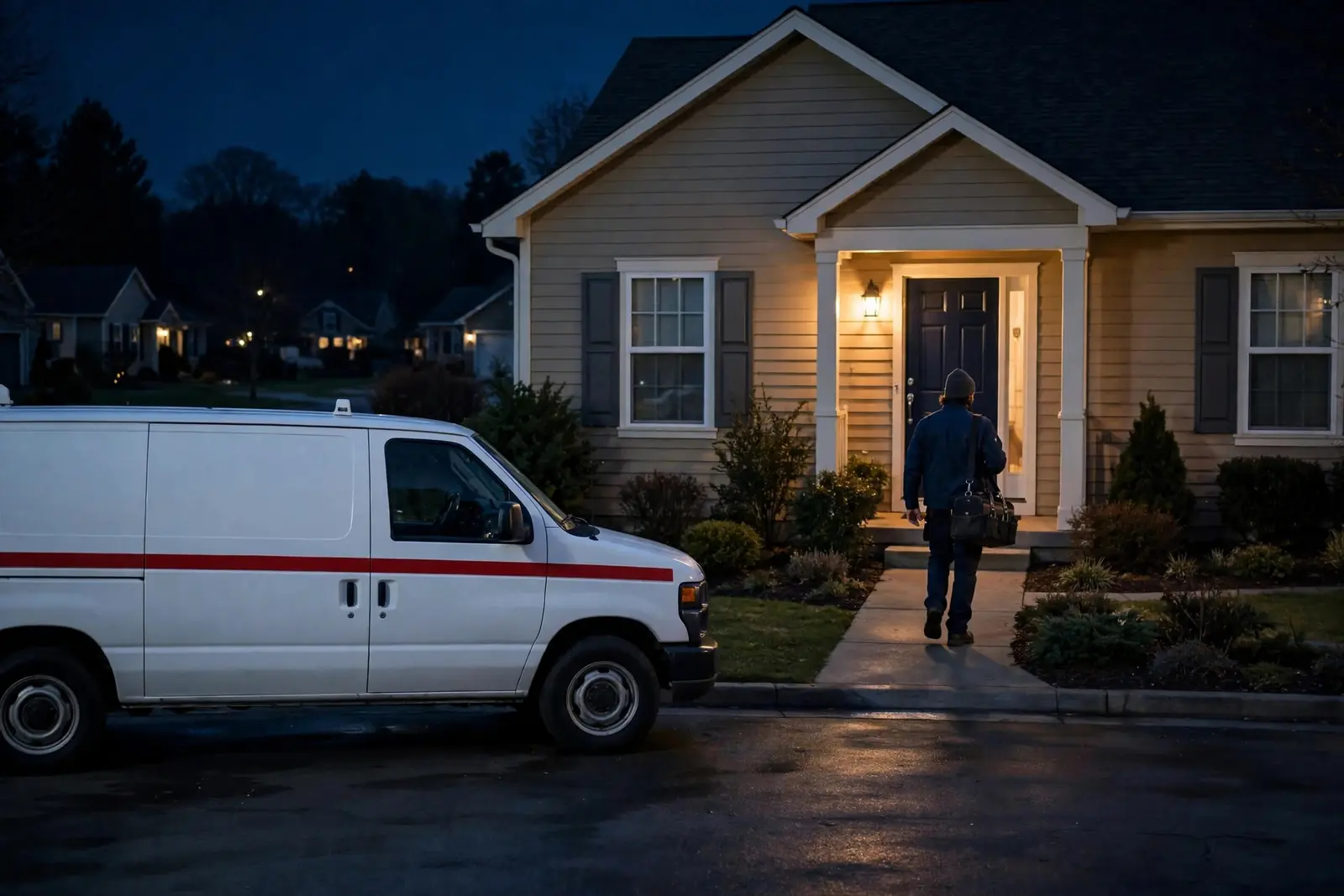
Emergency calls are prioritized. We inspect quickly, stop the damage first, find the root cause, and explain what needs to happen with straightforward pricing before we start. Same-day service is available Sunday through Friday across our Maryland, D.C. and Northern Virginia service area.
What the emergency technician does first
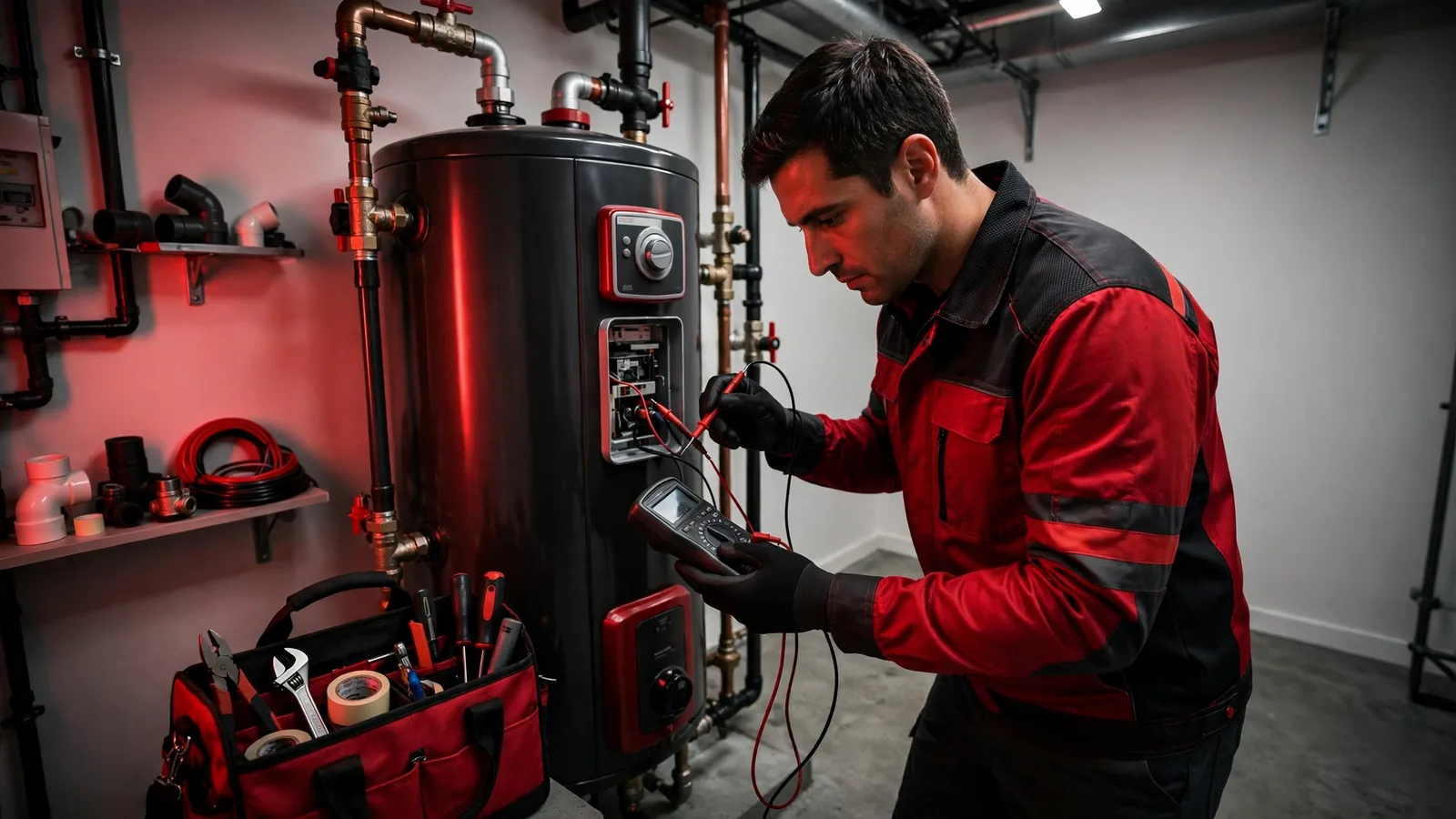
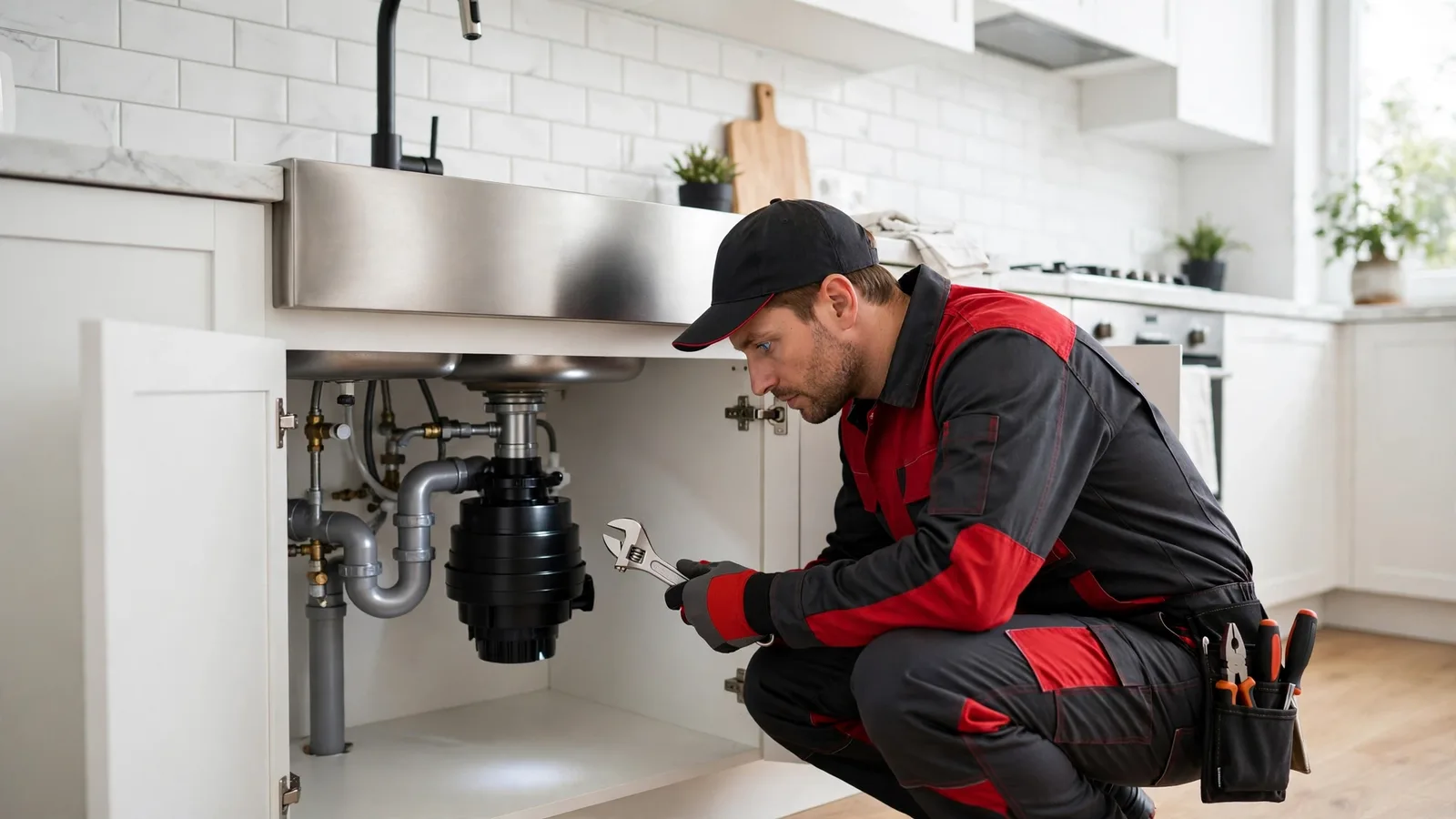
An emergency visit runs in a deliberate order. The emergency plumbing team will ask triage questions on the phone — where is the water, is it still flowing, have you shut it off — because the answers decide what comes off the truck first. On site, job one is stopping the damage: isolating the failed fixture or section, draining what needs draining, and, where a permanent fix cannot happen instantly, fitting a temporary cap or clamp that holds safely. Only then does the diagnosis begin — finding why the pipe burst, the valve failed or the line backed up, rather than just treating the wettest symptom. You get the cause, the options and the price explained before the permanent repair starts, and photos of the damage are worth taking throughout, for your own records and any insurance claim.
What an emergency call costs depends on
Emergency work is priced by the same factors as any repair, plus one: time. A call at midday with the water already off is a different job from a 2 a.m. call with a flooded kitchen. Beyond timing, cost follows how quickly the damage was stopped (every running minute adds water removal and drying), how accessible the failed section is, what parts and lengths of pipe are involved, and whether follow-on work — drywall, flooring, a replacement water heater — is part of the same visit. The biggest lever, by far, is the shut-off: the homeowner who stops the water in the first five minutes nearly always pays less in total than the one who waits, which is why the valves section above is the most valuable part of this page.
Need Help With This?
Our related service: Emergency Plumbing — Rapid response for sudden leaks, backups, or plumbing failures that threaten your home, safety, and daily routine.