No Hot Water? How to Troubleshoot Your Water Heater Safely
A cold shower is the water heater's way of asking for attention. Here is how to tell a tripped breaker or an out pilot from a failing tank, what is safe to check yourself, and the signs to stop troubleshooting and call.
The fast answer: check power or pilot before you assume the tank is dead
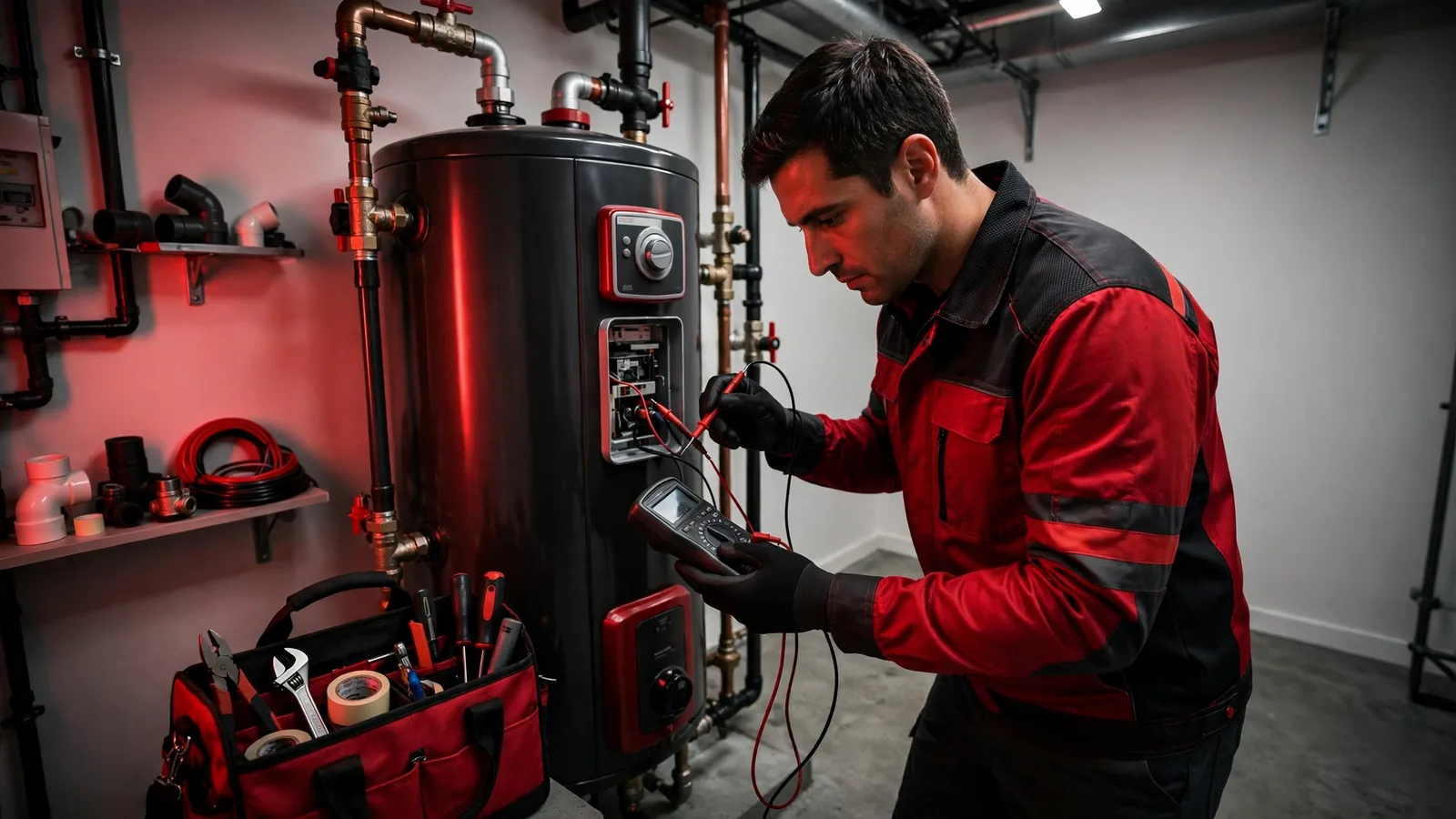
Most no-hot-water calls start with one of two simple causes, and neither means the heater has failed. On an electric unit, check the breaker panel first: a tripped breaker, reset once, often restores a heater that was working yesterday. On a gas unit, look through the sight glass for the pilot light — if it is out and there is no smell of gas, the pilot may simply need relighting following the instructions printed on the tank. If the breaker trips again, the pilot will not stay lit, or you smell gas at any point, stop there. Those are no longer checks, they are symptoms, and they are exactly what water heater repair and replacement work starts with.
Whole house, or just one shower?
Before anything else, run the hot tap at two or three fixtures. If every tap in the house runs cold, the problem sits at the heater itself — power, pilot, thermostat or the tank. If only one shower or one sink has lost its hot water while the rest of the house is fine, the heater is probably innocent and the fault is local: a failed mixing valve, a cartridge that has seized, or a supply problem on that one branch. That single distinction saves homeowners in Beltsville from pricing a new water heater for what turns out to be a twenty-minute fixture repair, and it is the first question we ask on the phone for the same reason.
Gas heaters: the pilot, the thermocouple and the smell test
A gas water heater that makes no hot water at all has usually lost its pilot or the part that proves the pilot is lit, the thermocouple. Relight the pilot once, exactly as the tank label describes, and watch whether it stays lit when you release the control knob. A pilot that lights and then dies as you let go points at the thermocouple or the gas control valve, not at your technique. Never relight repeatedly, never hold the control down to force it, and if you smell gas — rotten-egg odour near the heater — leave the area, do not touch switches, and call for emergency plumbing help from outside the room. Gas faults are the one category in this guide with no safe DIY second attempt.
Electric heaters: breakers, reset buttons and elements
An electric heater has no pilot, so its cold-water story is electrical. Check the dedicated breaker in your panel; if it has tripped, reset it once. Many tanks also have a high-limit reset button behind the upper access panel, but that panel covers live terminals — if you are not completely comfortable working around them with the power off, leave it to a professional. A breaker that trips again, or hot water that returns for a day and vanishes, usually means a heating element or thermostat is failing and shorting under load. Replacing elements and thermostats is routine repair work; repeatedly resetting a breaker that is telling you something is not.
Lukewarm water, or hot water that runs out too fast
Water that never gets properly hot, or a shower that turns cold halfway through, tells a different story from no hot water at all. Sediment settling in the bottom of the tank insulates the water from the burner or element, so the heater works harder and delivers less. A broken dip tube lets incoming cold water mix at the top of the tank, cutting the usable hot water dramatically. A thermostat set too low — or failing — produces the same complaint. And sometimes the honest answer is capacity: a household that has added a bathroom, a soaking tub or a teenager can simply outgrow a tank that was adequate before. Each cause has a different fix, which is why guessing parts at it rarely ends the problem.
Leaks, rust and rumbling: stop troubleshooting
Some signs end the troubleshooting phase on sight. Water pooling under the tank, rust streaks down its side, or a drain valve that weeps constantly mean the tank or its fittings are losing integrity — a leaking tank cannot be repaired, only replaced, and waiting usually converts a planned replacement into a flood. Rusty or discoloured hot water from every tap points to corrosion inside the tank. Loud rumbling, popping or banging as the heater fires is sediment boiling under pressure, a late-stage warning that shortens what life the tank has left. If a leak is active and spreading, shut off the cold supply valve above the heater and call us — containing the water matters more than diagnosing it, and it is also where leak detection work begins if the source is not obvious.
When to call us
Homes in Beltsville and College Park tend to call at the same three moments: the morning the shower runs cold before work, the evening the breaker trips for the second time, and the day someone notices water under a tank that has been quiet for years. Check the breaker, check the pilot, and check whether the whole house or one fixture is affected — those three checks are yours, and they settle a fair share of cases. But call Eagle Plumbing at (240) 266-8317 or send the lead form on this site when the breaker trips again, when a pilot will not stay lit, when you smell gas, when hot water runs out faster every month, or when there is any water, rust or rumbling at the tank. We will test the heater properly, tell you plainly whether it is a repair or a replacement, and price the work before anything begins.
Need Help With This?
Our related service: Water Heaters — Reliable water heater repair, replacement, and efficiency upgrades to keep hot water consistent and dependable.