What a Video Camera Pipe Inspection Can Reveal
Before anyone digs up your yard, a camera can travel your sewer line and show exactly what's wrong and where. Here's what it finds — and what it saves you.
Seeing is knowing
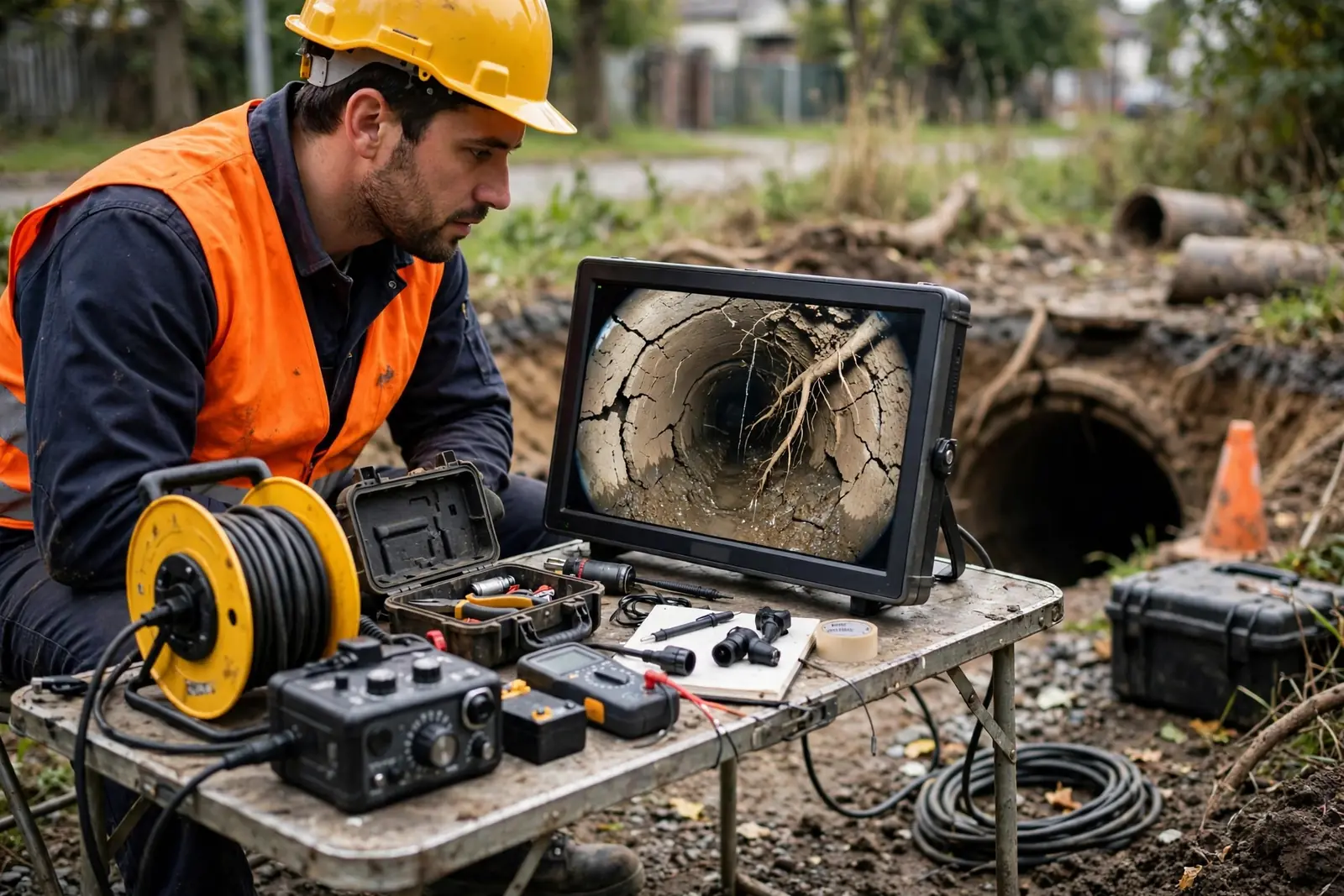
A video camera pipe inspection feeds a high-resolution waterproof camera through your drain or sewer line while the plumber watches a live feed. Instead of theories, you get pictures: the blockage, its cause, and its exact location and depth.
How the inspection works, step by step
The camera enters the line through an access point — ideally an existing cleanout, sometimes a removed toilet or a roof vent when no cleanout exists. The camera head is a small waterproof unit with bright LED lights and a self-levelling lens, so the picture on the monitor is always the right way up as it travels. A flexible push cable feeds it through bends and along the full length of the line while a counter tracks how many feet in it is. Built into the head is a transmitter (a sonde): when the camera stops at a blockage or a break, the technician uses a locator wand at the surface to find that exact spot and measure its depth, then marks it on the ground. That mark is the difference between digging one precise hole and trenching a yard on a hunch. The whole run is recorded, and you can watch the live feed alongside the technician and keep the recording — useful for your own records, for a seller or insurer, or for planning work later.
What the camera finds
Recurring clogs explained at last — maybe it's root intrusion at a joint, a cracked or broken section, a misaligned pipe, a bellied (sagging) stretch where waste collects, or corrosion eating an older line from the inside. The camera also documents overall pipe condition, which matters when you're planning work or buying a home.
Reading the picture: what problems look like
Experienced eyes read the feed the way a doctor reads a scan. Roots appear as fine, hair-like masses squeezing through a joint, or as a dense plug that has grown into the flow. A belly — a sagging section — shows up as a stretch where the camera travels underwater far longer than it should, because waste and paper settle in the low spot instead of flowing through. An offset joint looks like a step in the pipe wall where two sections no longer line up. Grease coats the walls in pale, lumpy layers that narrow the passage; corrosion in old cast iron looks rough and flaky, shedding scale that catches debris. A crack or collapse is unmistakable. Just as important is what a healthy line looks like — smooth walls, clear joints, water running freely — because confirming that a pipe is sound is also a result worth paying for.
When to book one
Camera inspection is the right first step for recurring clogs, slow drainage with no obvious cause, sewer backups or gurgling, suspected damage — and before a home purchase or renovation, when knowing the sewer's condition is worth far more than the inspection costs.
Better information, better repairs
A pinpointed problem means targeted repair: no unnecessary excavation, no fixing the wrong section, no surprises mid-job. It's why every sewer repair and trenchless job we do starts with a camera.
What happens after the camera
With the problem located and identified, the options narrow to the ones that actually fit. Buildup and roots in a structurally sound pipe point to cleaning — and for a thorough result that usually means hydro jetting, which scrubs the walls the camera just showed you. A single cracked or offset section can often be spot-repaired by excavating only at the locator's mark. A long run of deteriorated pipe may be a candidate for trenchless sewer repair — lining or replacing the pipe from inside, with little or no digging — while a collapsed line may leave full replacement as the only honest answer. The sequence matters: inspect first, then choose — the right tool depends entirely on what is actually in the pipe.
The pre-purchase inspection more buyers should get
One use of the camera deserves special mention: buying a home. A standard home inspection does not include the sewer line, yet in the DMV's older neighbourhoods the original clay, cast iron or even Orangeburg pipe may still be in the ground, decades past its design life. A sewer scope during the inspection period takes under an hour and can reveal a line that is sound, a line that needs cleaning, or a line whose replacement would add five figures to the true cost of the house — information that changes negotiations. Sellers order them too, to document a healthy line rather than argue about it. Whether the recording shows good news or bad, it replaces the most expensive kind of plumbing problem — the kind you discover after you own it. Keep the recording, whichever side of the sale you are on. It becomes the baseline for the line: if roots were present but minor, a follow-up inspection in a couple of years shows whether they are advancing or holding; if the line was cleaned, the footage proves the starting condition. Homes with mature street trees, older pipe materials, or a history of backups benefit from that rhythm — a periodic look every few years costs little next to emergency excavation, and it turns sewer maintenance from a surprise into a schedule.
Need Help With This?
Our related service: Video Camera Pipe Inspection — A high-resolution in-pipe camera removes the guesswork — pinpointing blockages, cracks and roots without excavation.