Sump Pump Not Working? Signs of Failure and How to Protect Your Basement
A sump pump usually fails during the storm you needed it for. These are the signs it is already struggling, a safe two-minute test you can do today, and when repair stops being enough.
The fast answer: test it before the storm, not during it
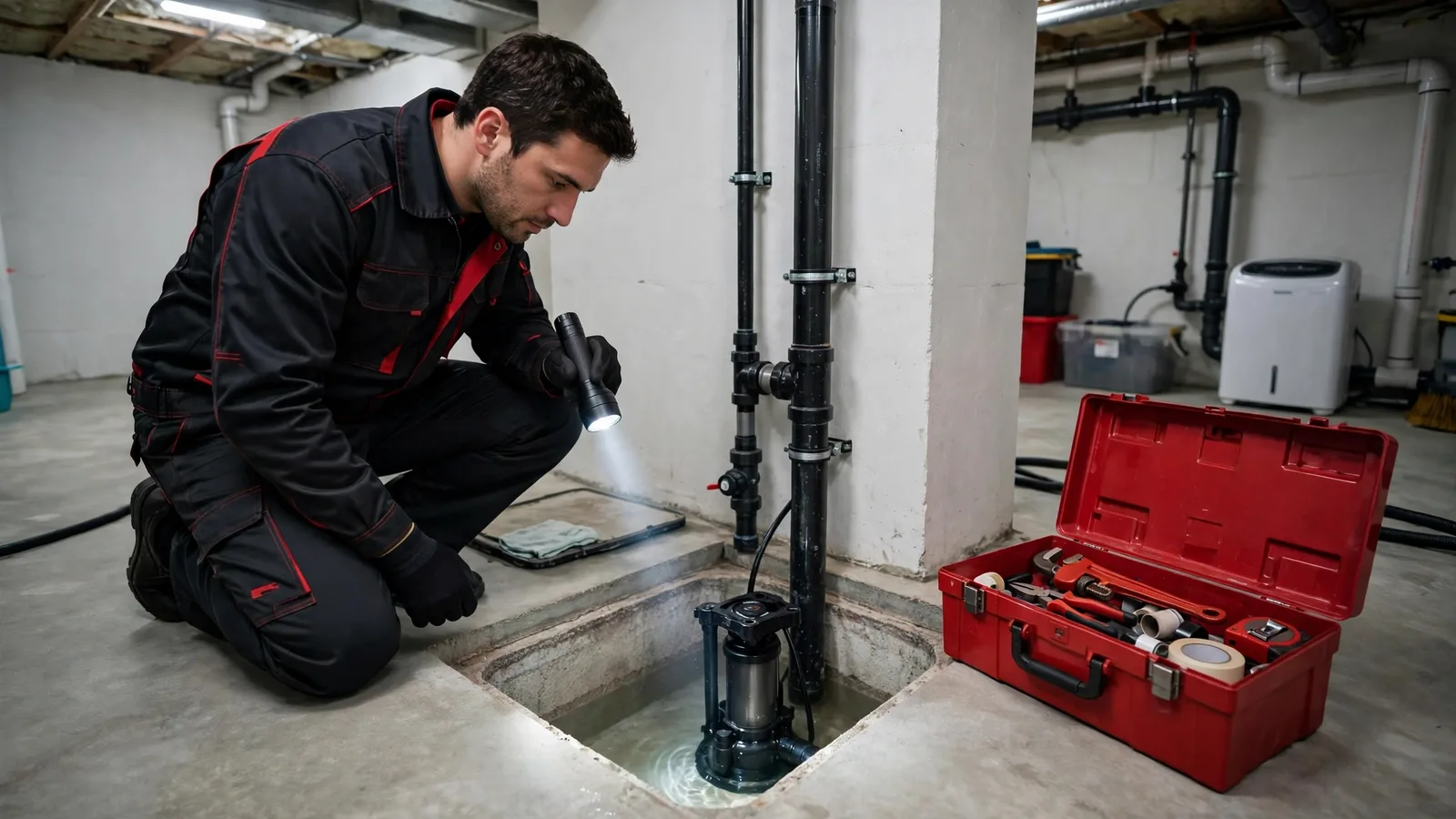
A sump pump has one job: move groundwater out of the pit in your basement floor before that water reaches your floor, your walls and everything stored down there. If yours has not run for months, do not assume it still works. Pour a bucket of water slowly into the pit and watch what happens. A healthy pump starts on its own, lowers the water level, and switches off cleanly. If the water rises and nothing starts, if the pump runs but the level does not drop, or if it grinds, rattles or keeps running after the pit is empty, treat it as failing — because the next heavy rain in Beltsville or anywhere across our area will test it far harder than you just did. A pump you have tested is a system. A pump you have not tested is a hope.
Five signs your pump is already struggling
Most failing pumps announce themselves quietly first. One: the pump runs constantly, even in dry weather, which usually means a stuck float or a check valve letting discharged water flow straight back into the pit. Two: it cycles on and off every few minutes, wearing the motor out far faster than normal use. Three: you hear grinding, rattling or a loud hum it never used to make. Four: water sits high in the pit, or the basement smells musty and feels damp even though you have never seen an actual flood. Five: age. A pump that is seven to ten years old and has never been serviced is living on borrowed time, however well it seems to run on a dry day. Any one of these signs deserves a visit before storm season, not after it.
A safe two-minute test you can do today
Start with power: confirm the pump is plugged into a working outlet and that no breaker or GFCI has tripped — a surprising number of dead pumps are simply unplugged pumps, knocked loose by storage bins or cleaning. Next, look into the pit and make sure the float can move freely, with nothing wedged between it and the pit wall. Then pour in roughly five gallons of water, slowly, until the float rises. The pump should start, push the water up and out through the discharge line, and stop once the level falls. Step outside if you can and confirm the water actually exits away from the house. If the pump does not start, stop there: unplug it before touching anything in the pit, and do not reach into standing water around a live electrical appliance. That boundary is where a homeowner test ends and a service call begins.
The usual causes — and why the discharge line matters
When a pump tests badly, the cause is usually one of a short list: a float switch stuck, tangled or worn out; a failed check valve, so every gallon pumped out quietly returns; debris, gravel or a small stored item that has fallen into the pit and jammed the intake; a tripped circuit or a motor that has simply reached the end of its life. Do not overlook the discharge line itself. If that line is blocked, crushed or frozen where it exits the house, the pump can run perfectly and still move almost no water — it is effectively a clogged drain working in reverse, pushing against a wall. And if water is also backing up through floor drains or fixtures elsewhere in the basement, the problem may not be the pump at all: that pattern can point to a sewer line issue, which needs a completely different diagnosis before anyone replaces a pump that was never the fault.
Battery backup: protection for the moment the power goes out
The cruel pattern with basement flooding is timing. The storms that push the most groundwater toward your foundation are the same storms that knock out power — and an electric pump with no power is just a bucket with a motor in it. A battery backup system is a second, smaller pump that takes over automatically when the main pump fails or the power cuts, and it can also step in when heavy inflow overwhelms the main unit on an ordinary day. For finished basements, homes that flood whenever the power flickers, and anyone who travels during wet weather, backup is not an upgrade — it is the difference between a wet pit and a flooded room full of furniture, flooring and stored belongings. Ask about it when your main pump is serviced, not after the first outage teaches the lesson.
Repair it or replace it — and when to call us
Repair makes sense when the pump itself is sound and the fault sits around it: a stuck or failed float, a worn check valve, a blocked discharge line, a power supply problem. Replacement is the smarter spend when the motor is dead or weakening, the housing is cracked, the unit needs attention again and again, or it is both old and undersized for the water your pit actually collects. Basements in Beltsville, Laurel, Silver Spring and Columbia sit through the same autumn and winter rain that finds every weak pump eventually. If your test today showed a pump that will not start, will not stop, or will not lower the water, call Eagle Plumbing at (240) 266-8317 or send the lead form on this site — we will test the float, the check valve and the discharge route, tell you honestly whether a repair will hold, and size a replacement and backup correctly if it will not.
Need Help With This?
Our related service: Sump Pump Installation & Repair — Sump pump installation, repair and replacement that keeps your basement dry — plus battery backup options for storm outages.