7 Signs Your Water Heater Is About to Fail
Water heaters rarely fail without warning. Rumbling tanks, rusty water and shrinking hot water are all messages — here's how to read them before you get the cold-shower surprise.
The warning signs
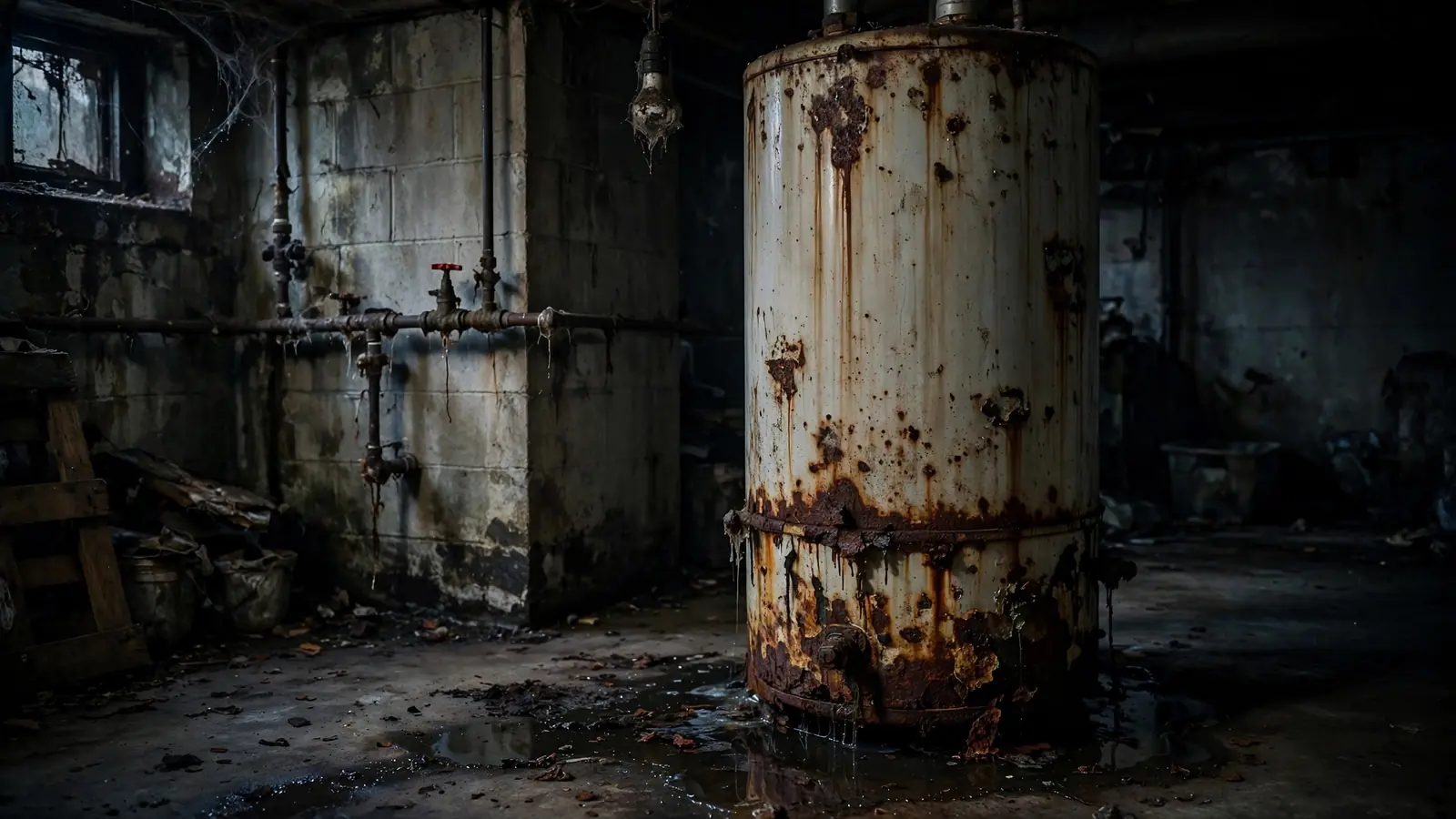
One: you're running out of hot water faster than you used to. Two: the water takes noticeably longer to heat. Three: the tank rumbles, pops or bangs — usually sediment hardening on the bottom. Four: hot water comes out rusty or discoloured. Five: you spot leaks or pooling around the unit. Six: your energy bills creep up as the heater works harder. Seven: the unit is simply old — most tank water heaters are living on borrowed time after about a decade.
What is actually happening inside the tank
Most of those seven signs trace back to two slow processes. The first is sediment: minerals in the water supply settle and bake onto the bottom of the tank, insulating the water from the burner or element below. The heater runs longer to do the same job — that is the rising energy bill — and the trapped heat and steam in the sediment layer make the rumbling and popping you hear. Maryland's water is hard enough in many areas that an unflushed tank can accumulate a serious layer within a few years. The second process is corrosion. Every tank has a sacrificial anode rod designed to corrode in the tank's place; once the rod is consumed, the tank steel itself starts rusting — that is the discoloured water — and from there the timeline to a leak is a matter of when, not if. A third, smaller signal is a temperature-and-pressure relief valve that weeps occasionally: sometimes just a tired valve, sometimes the first hint of excess pressure in the system, and always worth having checked rather than ignored, since that valve is the unit's main safety device. Pooling water with no obvious source belongs to leak detection and repair territory as much as to water heaters — the leak may be a fitting above the tank rather than the tank itself.
Repair or replace?
Some failures are honest repairs: a failed heating element, a bad thermostat, a leaking valve. Others are the first chapter of a short story — a corroding tank can't be un-corroded. The right call depends on the unit's age, the cost of the repair and whether the same money is better spent toward a correctly sized new unit. A good plumber will walk you through both options with real numbers. A few factors frame that conversation. Age is the starting point: a repair on a six-year-old heater is usually money well spent, while the same repair on a twelve-year-old unit buys time on borrowed time. The type of failure matters too — controls, valves and elements are replaceable; the tank itself is not. Then there is fit: if your household has outgrown the tank, or you are tired of planning showers around recovery time, replacement is the moment to resize or consider a tankless unit rather than reinstalling the same limitation. Finally, a new installation can involve code-related items the old unit never had — an expansion tank, a proper drain pan, updated venting — which are part of doing the job correctly, not extras. All of this is why, as our guide to the signs of a hidden water leak explains, the cheapest water heater problem is always the one caught while it is still a choice.
What a technician checks on a water heater visit
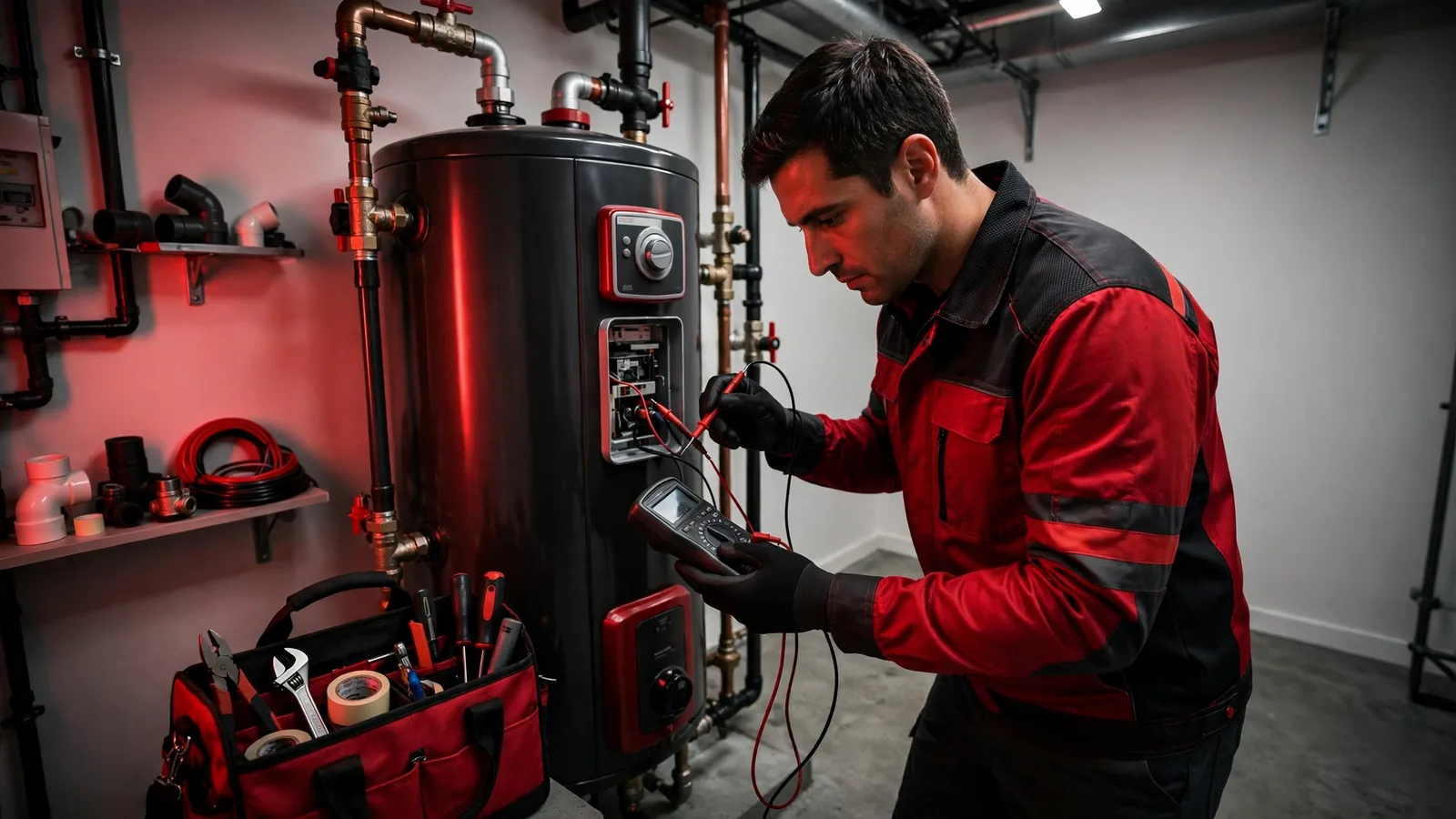
A proper service visit is more than a glance at the label. The technician drains and flushes a sample from the tank to see how much sediment comes out, tests the relief valve, and inspects the anode rod on units where its condition decides the repair-versus-replace question. On gas models, the flue and venting are checked for safe draw and the burner assembly for clean ignition; on electric models, the elements and thermostats are tested individually, because a single failed upper element is a classic cause of 'not enough hot water' that gets misread as a dying tank. Connections, shut-off valves, the expansion tank and the drain pan all get a look, since small leaks at fittings are cheap to fix now and expensive later. You should come away knowing the unit's age, its condition, and a straight answer on how much life is realistically left in it.
Maintenance that adds years
Water heaters are not maintenance-free, and the little they ask for pays back disproportionately. Flushing the tank once a year keeps sediment from baking on — the single most effective habit. Having the anode rod inspected every few years, and replaced when it is spent, is what stands between a tank that lasts fifteen years and one that rusts out in eight. Keep the thermostat at 120 degrees: hot enough for comfort and hygiene, low enough to slow corrosion, cut energy waste and remove a scald risk. Keep the area around the unit clear so leaks are visible early rather than hidden behind stored boxes. In hard-water homes, a water softener and filtration system reduces the mineral load reaching the tank in the first place — which protects not just the heater but every fixture and appliance downstream of it.
Why waiting is the expensive option
A water heater that fails gradually is an inconvenience. One that fails suddenly can be a flood — a leaking or burst tank releases its full contents plus whatever the supply line adds. Timely service prevents the failure, the water damage and, for commercial properties, the downtime.
What to do this week
Take sixty seconds: look at your water heater. Note its age (the label has a manufacture date), look for rust, moisture or rumbling you hadn't noticed. If you find two or more of the signs above, schedule service while it's still your choice — not the heater's.
Need Help With This?
Our related service: Water Heaters — Reliable water heater repair, replacement, and efficiency upgrades to keep hot water consistent and dependable.