Signs Your Home Needs Repiping — and What Repiping Actually Involves
One pinhole leak is a repair. The third one is a pattern. Here are the signs your pipes themselves are reaching the end of their life — and what partial and whole-home repiping actually involve, step by step.
The fast answer: when the pipe itself is the problem
Every pipe material has a working life, and when a system reaches the end of it, the failures stop being isolated events. One leak at one joint is a repair. Leaks appearing in different places, water changing colour, pressure fading year by year — that is the system telling you the pipe walls themselves are wearing out from the inside. At that point each new repair buys a shorter interval before the next one, and the honest conversation changes from fixing the latest leak to repiping the runs that keep producing them. The signs below are how you tell which side of that line your home is on.
Sign one: leaks that keep coming back
A single pinhole leak in otherwise healthy pipe is bad luck, and a spot repair settles it. The warning pattern is repetition: a second leak within a year or two, then a third in a different room, each one in pipe of the same age and material. Corrosion does not attack one random inch of a system — it thins the walls everywhere at roughly the same rate, so the first pinhole is simply where the wall happened to be weakest. Pinpointing each escape is leak detection work, and it matters, because the map of where leaks have appeared is often the clearest evidence of how much of the system is failing. When the map keeps growing, you are no longer maintaining pipes. You are chasing them.
Sign two: rusty water and pressure that keeps fading
Run a tap that has sat unused overnight and watch the first seconds of water. A rusty or brown tint that clears as the water runs points to corrosion inside your own supply lines, especially when it shows up on the hot side or after holidays away. Metallic-tasting water tells the same story. Pressure is the other half of the sign: galvanized pipe rusts from the inside out, narrowing its own passage year after year, so showers weaken gradually and upstairs fixtures suffer first. Cleaning aerators and checking valves are worth doing — they rule out the simple causes — but when the simple causes are cleared and the flow is still poor, the restriction is the pipe itself, and no fixture work will restore it.
Sign three: the age and material of your pipes
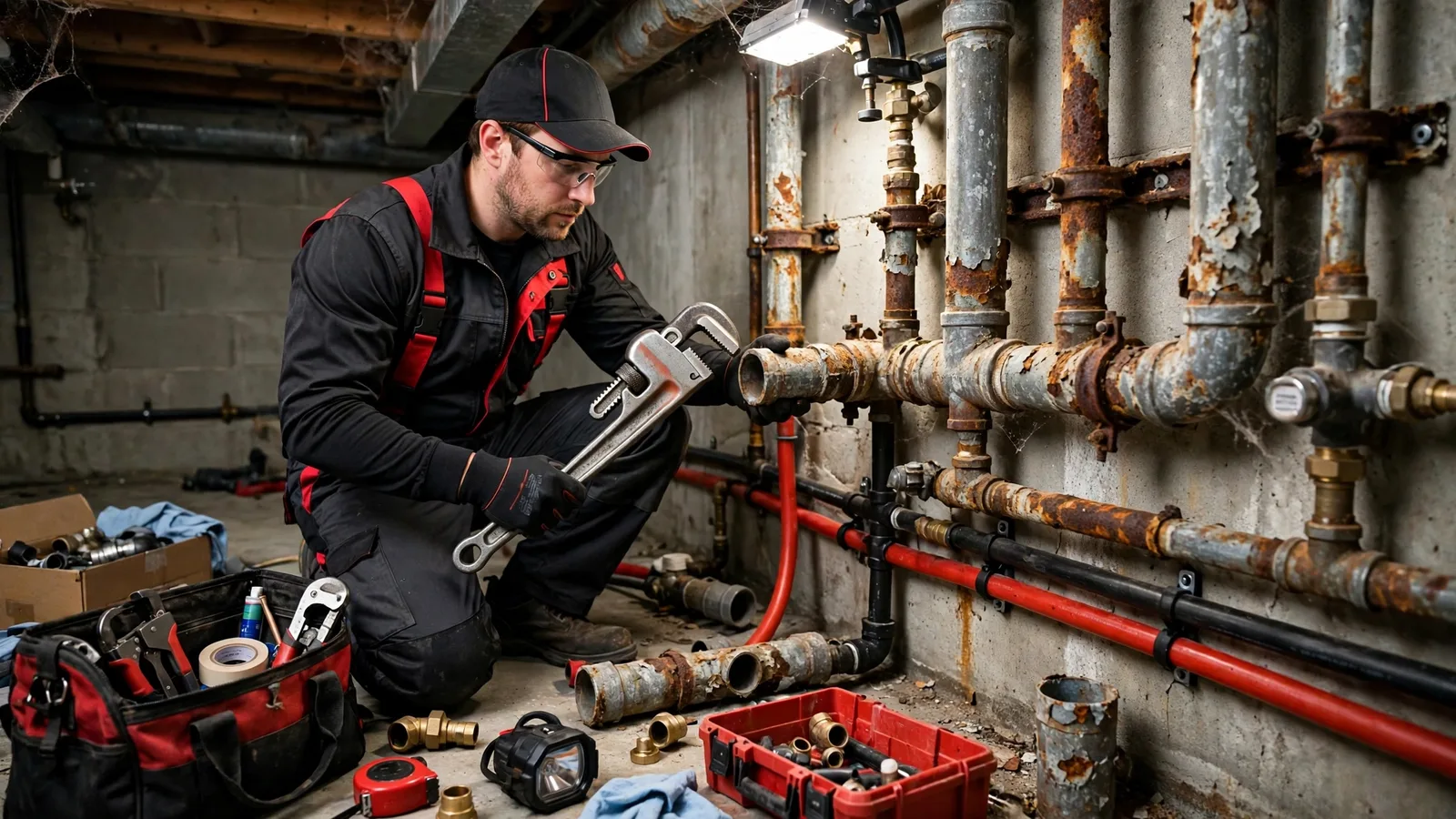
Some piping announces its own deadline. Galvanized steel, common in homes built decades ago across Beltsville, Laurel and Hyattsville, corrodes internally until the signs above appear. Polybutylene, installed in many homes in the late twentieth century, is known for deteriorating from the inside when exposed to chlorinated water, often with no external warning before a failure. Older copper usually lasts longer, but aggressive water can pit it into the same repeating-pinhole pattern. You can often identify what you have in the basement or crawl space: galvanized is dull grey and magnetic, polybutylene is a flexible grey pipe, copper is unmistakable. If your home still runs on a material at the end of its expected life, planning a repipe on your schedule is far cheaper than meeting it as an emergency.
Repair or repipe? And partial or whole-home?
The honest test is pattern, not panic. Repair when the pipe around the failure is sound, the material is well within its life, and the leak has a local cause — a bad joint, a frozen section, physical damage. Repipe when failures repeat across the system, when water quality and pressure are declining together, or when the material itself is the problem. And repiping does not have to mean the whole house at once. Many homes need only the failing runs replaced: the galvanized branches feeding the bathrooms, say, while a newer main section stays. Our repiping service starts with that assessment — what is actually failing, what can stay, and what each scope would involve — so the plan fits the house rather than a package.
What repiping actually involves, step by step
A repipe is planned work, not demolition. It starts with an assessment of the existing system: materials, condition, access, and where the runs travel. From that comes a written plan and pricing before any wall is opened. The work itself proceeds in stages, section by section, starting where the main water line enters the home, so water can be restored to finished areas as the job moves rather than leaving the whole house dry for days. New lines are routed to minimise opening finished surfaces, every connection is made and inspected, and the system is pressure-tested before anything is closed up. Openings made for access are patched as part of finishing properly. You should know, before work begins, the order of the stages, how long water will be off each day, and what the final testing showed.
When to call us
Homes in Beltsville, Silver Spring, Laurel and Columbia sit on the same generations of piping, and we see the same progression in all of them: a leak repaired here, pressure fading there, water that no longer runs clear. If two or more of the signs in this guide sound familiar — or you have paid for the same kind of leak twice — call Eagle Plumbing at (240) 266-8317 or send the lead form on this site. We will assess the system honestly, show you which runs are failing and which are sound, and price a partial or whole-home repipe only where the evidence supports it, before any work begins.
Need Help With This?
Our related service: Repiping & Pipe Replacement — Whole-home and partial repiping that replaces corroded, leaking supply lines with modern piping — planned carefully, section by section.