How Frozen Pipes Become Burst Pipes — and How to Prevent It
Maryland winters don't have to mean burst pipes. Understanding why pipes freeze — and the five causes behind almost every case — makes prevention simple.
It's the pressure, not the ice
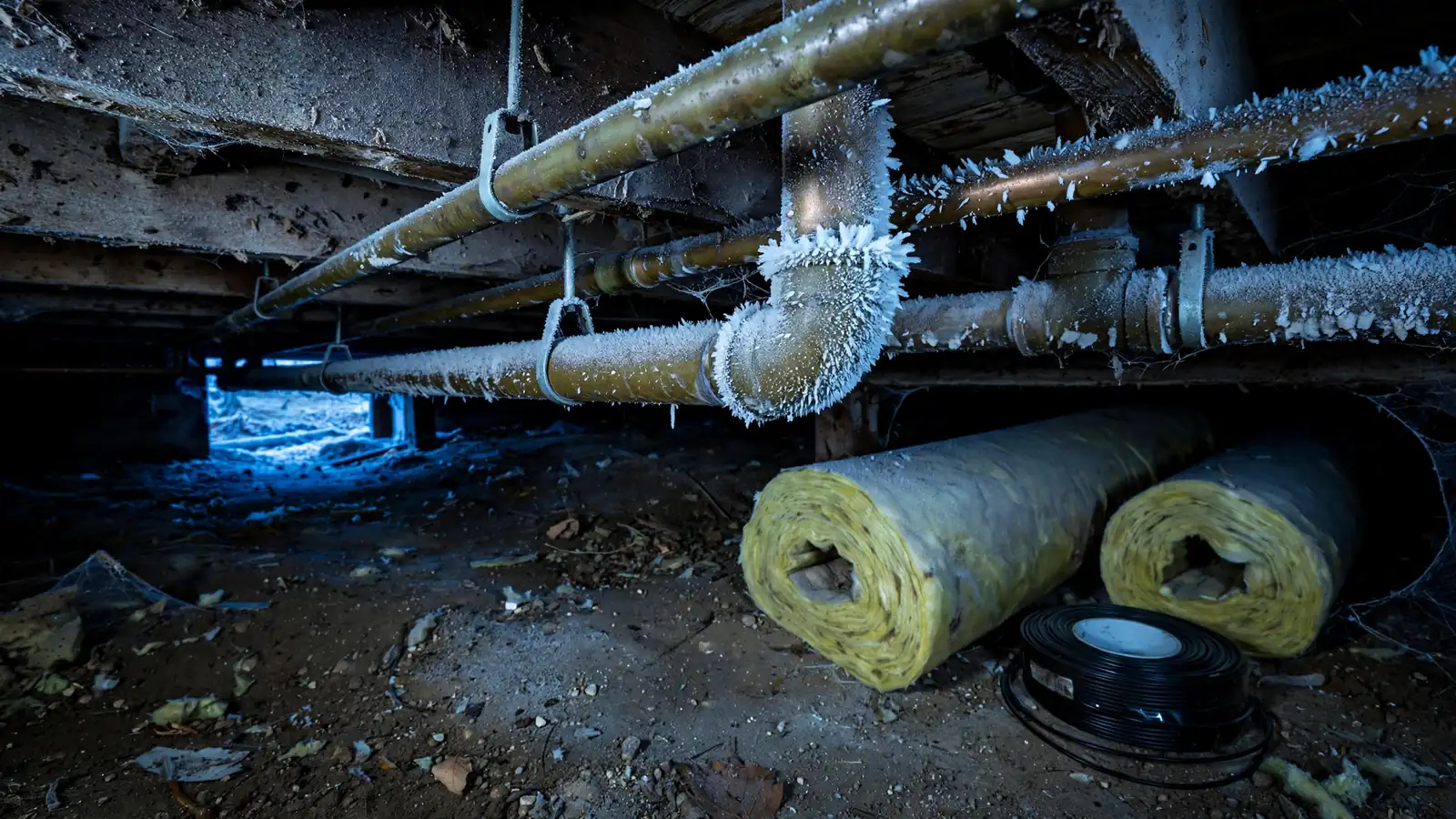
When water freezes inside a pipe it expands, but the ice itself usually isn't what splits the pipe. As the frozen section grows, it traps water between the ice and the closed faucet, and the pressure in that trapped section climbs until the pipe wall or a joint gives way. That's also why the flood often starts when things thaw — the crack was already there, waiting for water to flow again.
The five usual causes
Almost every frozen-pipe call traces back to one of these: a sudden hard freeze; poor or missing insulation; pipes running through exterior walls or crawl spaces; unheated basements, garages or attics; and lines with little or no water flow. Homes in Beltsville and across the DMV hit several of these at once on the coldest nights of the year.
The pipes that freeze first
Not every pipe in your house is at the same risk. The ones that freeze first are the ones with the least warm air around them: supply lines running through exterior walls, pipes in unheated crawl spaces and attics, lines in the garage, and the short run to an outside hose bibb. Kitchen and bathroom sinks fitted against an outside wall are classic trouble spots, because the cabinet hides the pipe from the room's heat while the wall cavity stays cold. Older homes in the DMV often have plumbing that was routed wherever it fit decades ago — through rim joists, over vented crawl spaces, along masonry — and those runs can sit at outdoor temperature even while your thermostat reads 70. If one fixture in the house is always the first to slow down on a cold morning, it is showing you exactly where your most vulnerable pipe lives.
Thawing a frozen pipe safely
If you suspect a freeze, start by opening the affected faucet — this relieves pressure and gives melting water somewhere to go. Then apply gentle heat to the frozen section, working from the faucet back toward the blockage: a hair dryer on a low setting, a portable space heater aimed at the pipe (never left unattended), warm towels wrapped around it, or electric heat tape fitted before winter. Check for frost on the pipe's surface and feel along its length for the coldest stretch. What you must never use is an open flame — no propane torch, no kerosene heater held against the pipe. A flame can boil the water trapped inside a closed section and burst the pipe on the spot, scorch joints and nearby wood, and start fires that smoulder unseen inside walls. If the frozen pipe is inside a wall, you cannot find it, or the pipe has already split, treat it as a genuine plumbing emergency and call rather than experiment — the cost of guessing wrong is a flooded room.
Prevention that actually works
Insulate exposed pipes before winter, especially in crawl spaces and exterior walls. Keep a slow drip running on vulnerable lines during hard freezes. Open cabinet doors under sinks on exterior walls so warm air reaches the pipes. And know where your main shut-off valve is — if a pipe does burst, shutting the water off in the first minute is the difference between a repair and a restoration project. Make it a seasonal routine rather than a one-off. In the fall, disconnect garden hoses, shut the interior valves feeding hose bibbs and drain those lines, insulate anything exposed, and seal obvious drafts around pipes in crawl spaces and rim joists. During a hard freeze, keep the house at a consistent temperature day and night — a deep overnight setback saves a little energy and risks a lot of pipe — and let vulnerable faucets drip slowly. If you travel in winter, either shut off the main and drain the system or keep the heat at 55 degrees or above and have a neighbour check the house; a large share of the worst burst-pipe damage we see happens in homes that were empty when the pipe let go.
Already frozen? Already burst?
If a fixture gives no water or only a trickle, a pipe may be frozen — call before it becomes a burst. If you find a split pipe or active leaking, shut off the main valve and call us. We control the water, locate all the damage (nearby sections are often stressed too), and repair or replace the damaged section properly — no temporary patches. Here is what that call actually looks like. An emergency plumber starts by isolating the water and draining the damaged line so the flooding stops for good, not just slows. We then trace the full extent of the problem — a burst rarely travels alone, and the sections either side of a split are often bulged or weakened and will fail next winter if they are left in place. Frozen-but-intact sections are thawed with controlled equipment rather than guesswork, the damaged length is cut out and replaced, and the line is pressure-tested before anything is closed up, so we know the repair holds at full pressure. Finally we check the fixtures that lost water and advise on insulating the run so the same pipe does not freeze again.
What a burst-pipe repair costs depends on
Because no two freezes damage a home the same way, honest pricing follows the diagnosis rather than a number quoted blind. The main factors are where the break sits — an open basement ceiling is a straightforward fix, while a split inside a finished wall or under a slab takes longer to reach — how many sections were damaged, whether the pipe material needs repair or full replacement of the run, and how much water escaped before the shut-off, since drying, drywall and flooring work can outweigh the plumbing itself. That is why our approach is to stop the water, show you exactly what failed, and give you straightforward, written pricing for the repair before the work begins.
Need Help With This?
Our related service: Burst & Frozen Pipe Repair — Fast, professional repairs to restore water service and prevent flooding, wall damage, and costly emergency replacements.