Garbage Disposal Not Working? Troubleshooting Steps Before You Call
A disposal that hums, leaks, or does nothing at all usually fails for one of a handful of simple reasons. Work through these safe checks first — and know the signs that mean it is time to repair or replace the unit instead.
First, the one rule that matters most
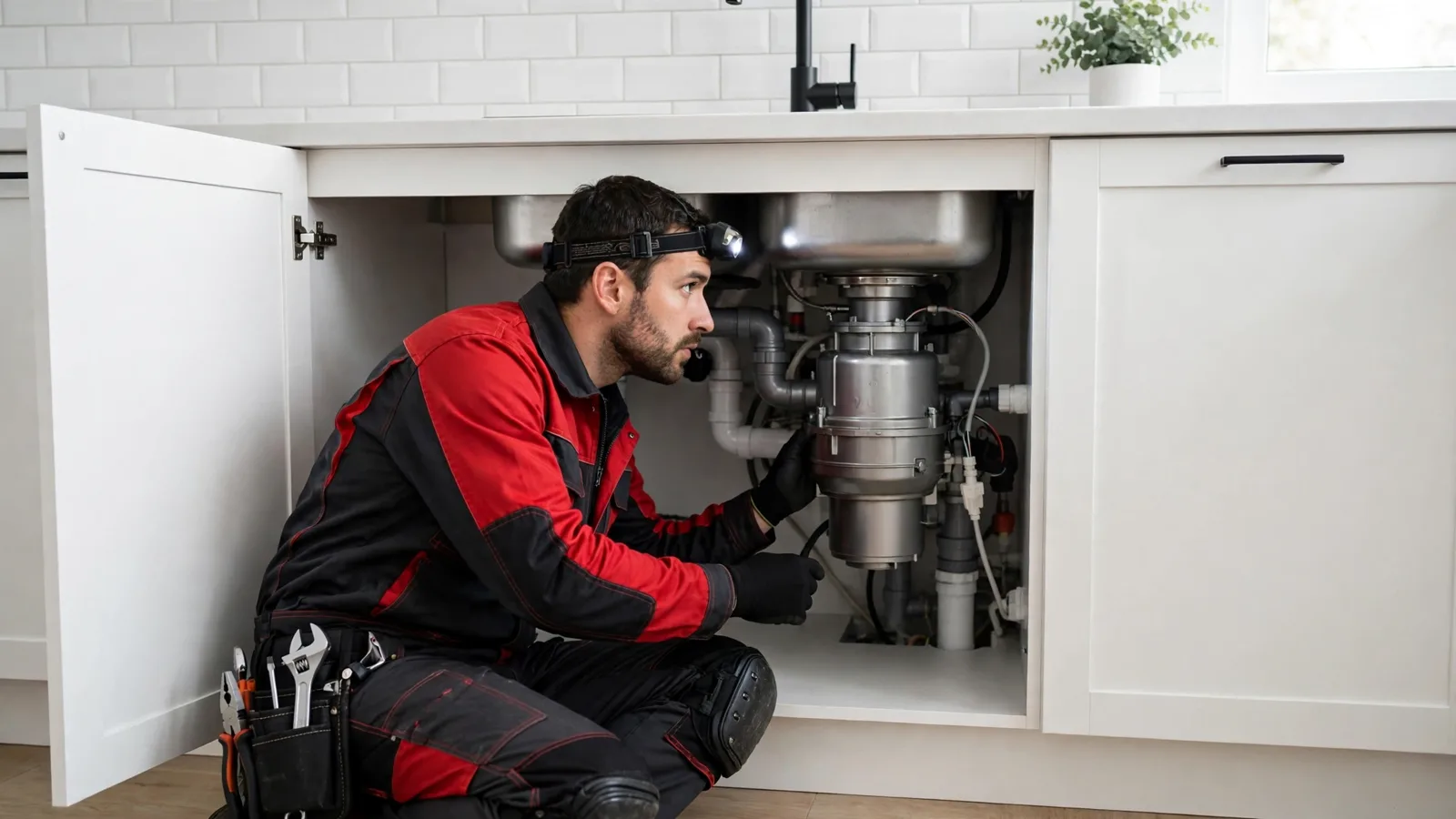
Never put your hand inside a garbage disposal — not to fish out a spoon, not to feel for a jam, not even when the switch is off. The impeller plate can turn without warning if power returns, and the chamber walls themselves are sharp. Before any check in this guide, turn the wall switch off. For anything beyond a reset button or a wrench turn from underneath, also unplug the unit under the sink or switch off its breaker at the panel. Work with a flashlight and tongs or needle-nose pliers from above, and keep your fingers out of the drain opening at all times. Every step below can be done safely that way.
Completely silent? Check the power before anything else
If the disposal does nothing at all — no sound, no movement — the most common cause is its built-in overload protector, which trips when the motor strains or overheats and cuts power to protect the unit. With the switch off, look on the underside of the disposal for a small red or black reset button, press it firmly, then run cold water and try the switch again. Still nothing? Check whether the sink area has a tripped GFCI outlet and reset it, then check the breaker panel for a tripped kitchen circuit. If the reset button trips again right away, or the breaker trips with it, stop there — the unit is telling you the fault is electrical or mechanical, and repeated resets will not fix it.
It hums but will not grind — that is a jam
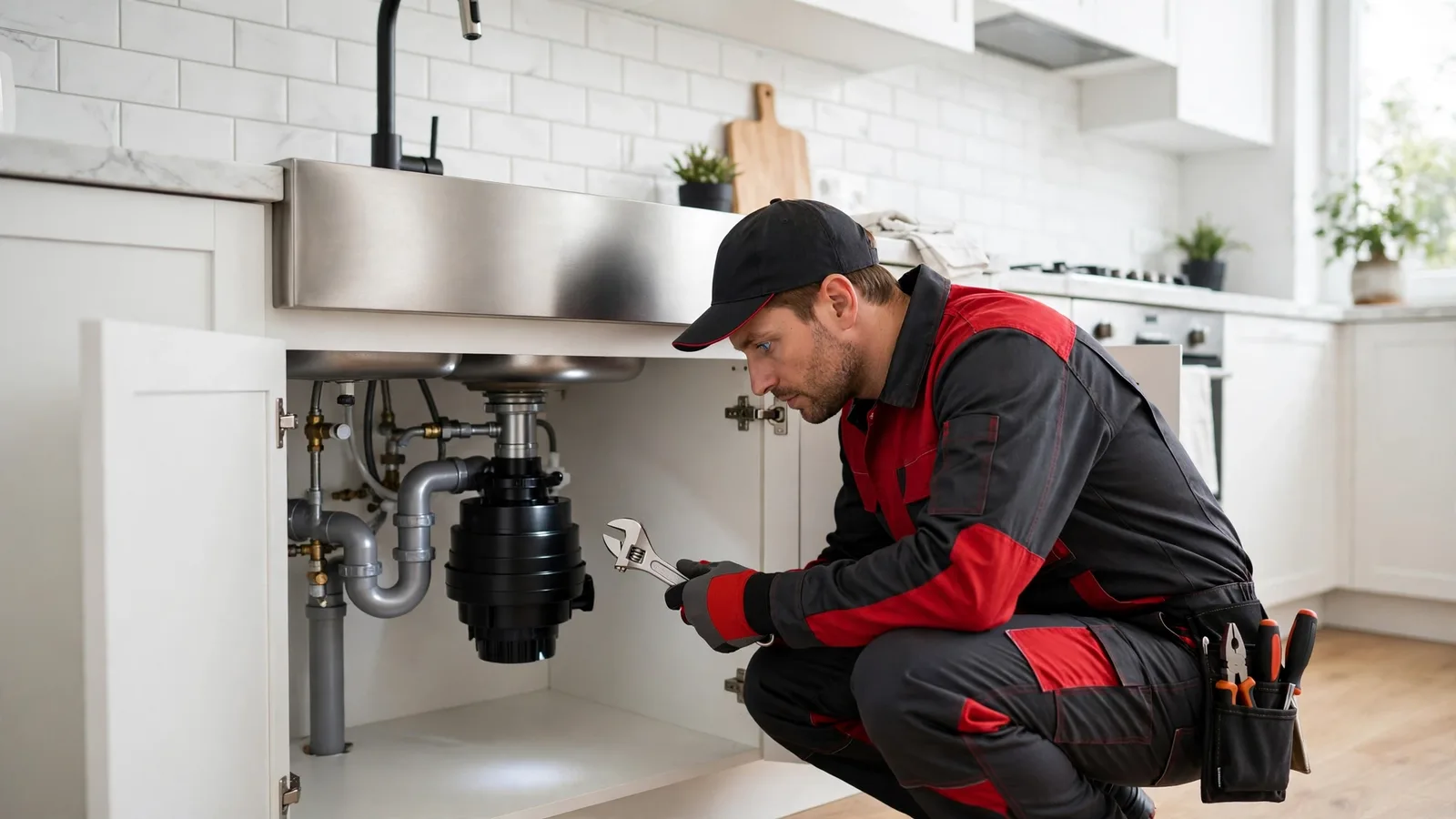
A low hum with no grinding almost always means something is wedged between the impeller plate and the grinding ring: a bottle cap, a small bone, a twist tie, or a utensil that slipped down unnoticed. Turn the power off at the switch and the breaker. Most disposals have a hex-shaped socket in the center of the underside — insert the Allen wrench that came with the unit, or a standard hex key, and work it back and forth until it moves freely. From above, use a wooden spoon handle to gently nudge the plate, and lift the object out with tongs. Then press the reset button, restore power, run cold water, and test. Never use chemical drain cleaners in a disposal — they damage the unit and make any later repair hazardous.
Water pooling under the unit tells its own story
Where the water appears points to the cause. Dampness at the very top, where the disposal meets the sink, usually means the mounting flange seal or putty has failed — often a straightforward reseal or a new flange. A leak at the side, where the dishwasher hose connects, is commonly a loose clamp or a cracked connector. Water dripping from the bottom of the unit itself is different: that means an internal seal has failed and water is passing through the motor housing. Internal seals are not a practical repair, so a unit leaking from its base is a unit at the end of its life — plan on replacement rather than paying to chase it.
It runs, but the sink drains badly and smells
When a disposal runs normally yet the sink empties sluggishly and odours keep coming back, the disposal is often innocent. Ground food waste and grease build up in the trap and the line just beyond it, narrowing the pipe until you effectively have a clogged drain downstream of a healthy appliance. Grinding a tray of ice cubes with cold water running can scour the chamber itself, and citrus peels help with freshness, but neither clears buildup further down the line. If other fixtures in the home are also backing up or gurgling, the problem may sit further out in the sewer line, and that needs a professional diagnosis rather than more work at the sink.
What a technician does when these checks are not enough
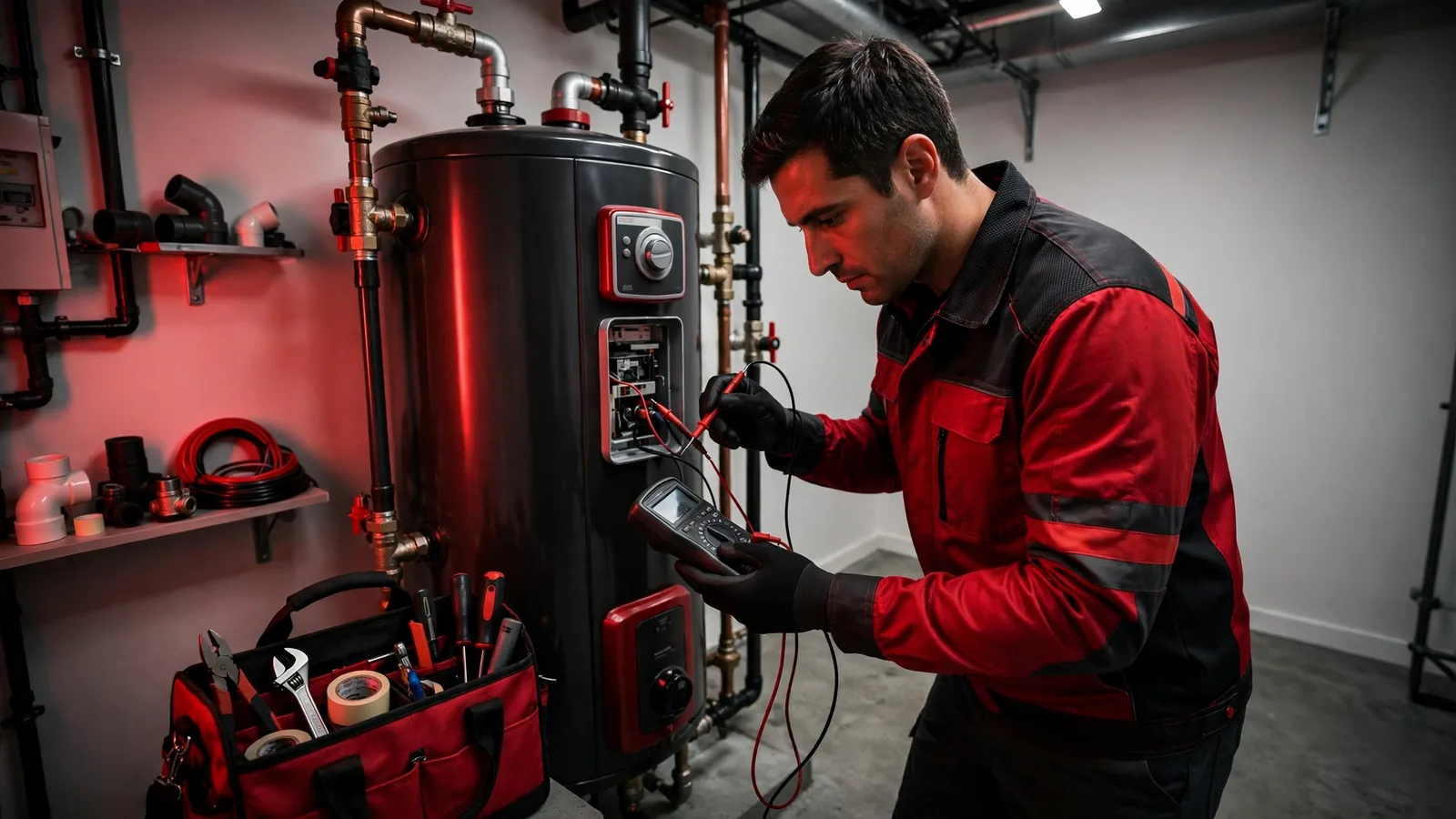
When the home checks come up empty, a technician works through the unit systematically rather than guessing. Power is verified at the outlet and, on hardwired units, at the connection — disposals on a shared kitchen circuit are sometimes killed by a fault elsewhere on the line. The flywheel and grind plate are checked for seized bearings and wear, the motor is tested for failed windings, and the mounting assembly is inspected, because a unit that sits crooked leaks at the flange even with a healthy motor. The dishwasher inlet and drain connections are checked for the classic installation error — a knockout plug left in place — and every joint is leak-tested under running water, not just looked at. If replacement is the answer, sizing matters: an undersized unit in a household that cooks seriously will live the same short life as the one it replaced, while a correctly sized, quieter model changes the daily experience of the kitchen. That full assessment is what our garbage disposal installation and repair service is built around.
Habits that keep a disposal alive
Most disposal deaths are slow and preventable. Always run cold water before, during and briefly after grinding — cold water keeps grease solid so the plate can carry it through instead of coating the pipes downstream. Feed scraps gradually rather than in one stuffed load. Never pour cooking grease into the sink at all. Keep fibrous and starchy foods — celery, onion skins, corn husks, potato peels, pasta and rice — largely out of the unit; they wrap the plate or swell into paste. Small chicken and fish bones and the occasional tray of ice cubes genuinely help, scouring the chamber walls as they grind. And run the disposal regularly: a unit that sits unused for weeks is the one whose seals dry out and whose plate seizes. Two minutes of habit per meal is the cheapest maintenance in your kitchen.
Repair it or replace it — and when to call us
Repair makes sense when the unit is relatively young and the fault is simple: a jam, a tripped reset, a flange leak, a loose dishwasher connection. Replacement is the smarter spend when the disposal leaks from its body, needs resetting again and again, makes grinding or rattling noises it never made before, or leaves standing water and odours no matter how often it is cleaned. Kitchens in Beltsville, Laurel, Silver Spring and College Park work their disposals hard through the holiday cooking season, which is exactly when tired units give up. If you have worked through these checks and the disposal still hums, leaks or stays silent, call Eagle Plumbing at (240) 266-8317 or send the lead form on this site — we will tell you honestly whether a repair is worth it, and fit a correctly sized replacement if it is not.
Need Help With This?
Our related service: Garbage Disposal Installation & Repair — Garbage disposal repair and replacement — we fix jams, leaks and dead units, and install quiet, correctly sized new disposals.